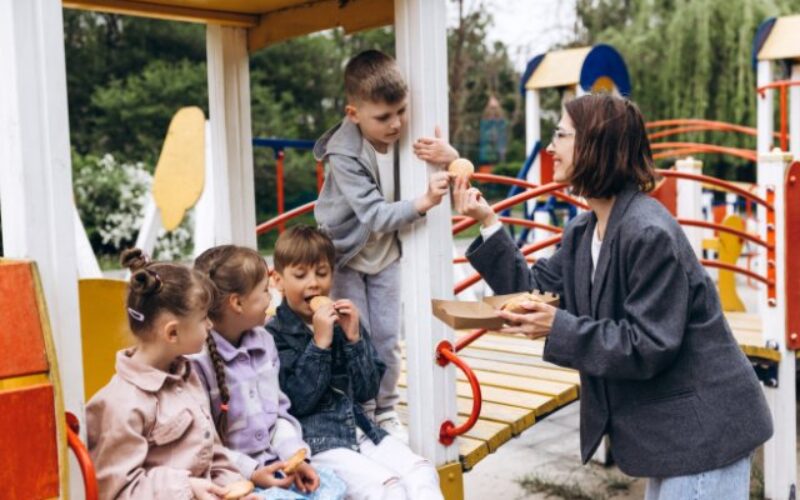
Offering different recess activities gives more students opportunities to participate in ways that match their interests, confidence levels, and abilities.
For teachers, homeschool families, and parents, creating variety can turn playtime into a richer part of a child’s educational experience. Let’s go into greater detail about why variety matters in school recess activities and how your organization can improve.
Different Children Enjoy Different Kinds of Play
Not every child races toward the soccer ball or climbs to the highest point on the playground. Some children prefer imaginative games, while others enjoy running, climbing, talking with friends, drawing with sidewalk chalk, or creating their own challenges. A recess environment that revolves around one dominant activity can leave students with fewer appealing ways to participate. Greater variety gives children more freedom to discover the activities that make movement and social interaction enjoyable.
Moreover, preferences can change as children grow or become more comfortable with their peers. A student who avoids a competitive game may enthusiastically join a cooperative obstacle course or playground challenge. Another child may alternate between energetic group games and quieter activities depending on the day. Giving students choices respects these differences without expecting every child to enjoy recess in exactly the same way.
Movement Supports a Balanced School Routine
Students spend significant portions of the school day listening, reading, writing, solving problems, and completing structured assignments. Recess creates an opportunity to move their bodies and shift attention away from teacher-directed tasks for a while. This change of pace can give children a welcome transition before they return to classroom expectations. Parents and educators can view movement as part of the overall rhythm of the school day rather than as competition for academic time.
That perspective can explain why active play belongs in a well-rounded school day alongside academic lessons and other educational experiences. Running, climbing, jumping, balancing, throwing, and other movements give children opportunities to practice physical skills through enjoyable activities. Recess also lets students make more choices about what they do and whom they play with. Independence gives play a different character from structured physical education classes or teacher-led activities.
Equipment Variety Creates More Possibilities
Playground equipment can shape what children naturally choose to do during recess. A playground with only a few features may repeatedly funnel students toward the same activities, particularly when many children share the space. Adding different types of equipment can expand opportunities for climbing, balancing, swinging, sliding, imaginative play, and social interaction. Schools should consider the number of students using the space and the range of activities available to them.
Discussions about why schools need more playground equipment often involve more than simply giving children additional things to play on. Variety can distribute students across a play area and provide alternatives when popular equipment becomes crowded. Different features can also appeal to children with different interests and abilities when schools select age-appropriate, accessible options thoughtfully. Schools should follow applicable safety standards, accessibility requirements, manufacturer guidance, and maintenance recommendations when planning playground improvements.
Simple Activities Can Add Plenty of Variety
Schools don’t need a completely redesigned playground to give students more choices. Portable play materials and simple activity ideas can introduce variety without permanently changing the outdoor environment. Teachers can rotate options throughout the year to keep recess interesting while learning which activities students actually use. Homeschool families can apply the same strategy in a backyard, community park, or neighborhood play area.
Useful options might include:
- Jump ropes for individual challenges and group games.
- Balls for kicking, tossing, bouncing, and cooperative activities.
- Sidewalk chalk for drawing, games, and imaginative play.
- Cones for races, obstacle courses, and movement challenges.
- Hoops for rolling, tossing, jumping, or creating original games.
Seasonal Changes Can Keep Recess Fresh
New York’s changing seasons naturally affect what children can do outside. Warm fall afternoons may invite running games and playground exploration, while colder months require different clothing and planning. Schools can adapt recess options according to weather, outdoor conditions, available space, and their own safety policies. Seasonal variety can prevent the same activities from dominating the entire school year.
Indoor recess deserves similar attention when weather keeps students inside. A classroom can offer movement games, building activities, simple challenges, drawing stations, or other choices that differ from ordinary academic work. Homeschool families can create a small collection of indoor movement activities for rainy or snowy days. Having backup options ready makes it easier to preserve a meaningful break even when outdoor play cannot happen.
Homeschool Families Can Create Their Own Mix
Homeschool parents have flexibility when incorporating play into the learning day. Recess might happen in the backyard one day, at a neighborhood playground another day, and during a nature walk later in the week. Families can use different settings to introduce climbing, running, biking, imaginative games, or social opportunities with other children. Variety can keep physical activity interesting without requiring a formal school playground at home.
Parents can also pay attention to what their children naturally choose when adults provide free time. Those preferences offer clues about which activities might motivate them to move, explore, and interact more often. A child fascinated by nature may enjoy scavenger hunts, while another may prefer ball games or playground challenges. Following those interests can make recess feel like genuine free time rather than another assignment disguised as play.
Variety Makes Recess More Welcoming
A strong recess program doesn’t need to entertain every child every second. Instead, it should provide enough meaningful choices that students can find activities that suit their interests, energy, abilities, and social preferences. Equipment, portable materials, quiet spaces, seasonal activities, and student-created games can all contribute to that variety. Teachers and families can adjust the mix over time as children grow and their interests change.
For educators and homeschool parents across New York and the wider United States, recess offers an opportunity to support more than a quick break from schoolwork. Thoughtful variety encourages children to explore movement, creativity, independence, friendship, and play in different ways. Adults can support those experiences without scheduling every moment or deciding that one type of play works for everyone. When children have variety of meaningful value, school recess activities become more inviting and valuable parts of the educational day.
Image Creds: FILE: 2100544886 by Maria Vitkovska
end of post … please share it!
end of post idea for home improvement
view and analyze home improvement ideas at our LetsRenovate center
Helpful article? Leave us a quick comment below.
And please give this article a rating and/or share it within your social networks.