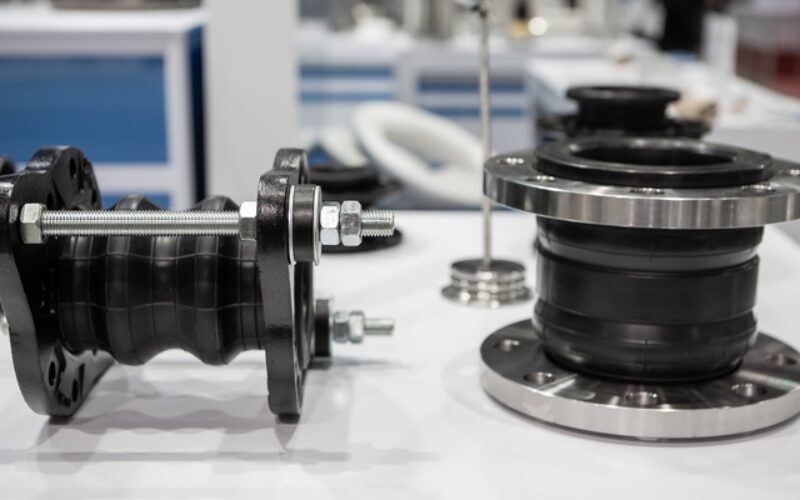
Temperature greatly affects the performance of expansion joints.
The impact of temperature on expansion joint performance is profound. Mismanagement can result in reduced efficiency, structural failure, or costly downtime. Explore how temperature fluctuations interact with expansion joints and how engineers, contractors, and architects can address it.
Understanding Expansion Joints and Their Function
Expansion joints are flexible connectors in pipelines, ducting, and structural framework systems. Their primary role is to accommodate movements caused by thermal expansion and contraction, vibrations, and external forces. Without these connectors, the pipes could develop cracks and eventually fail. They absorb pressure and movement so that the system operates smoothly without compromising its integrity.
High-quality expansion joints preserve system stability while mitigating risks associated with thermal fluctuations. By allowing for controlled movement, they enhance the longevity and efficiency of various industrial systems.
How Temperature Affects Expansion Joint Materials
The material making up an expansion joint affects its performance, especially in response to temperature changes. Different materials—metal, rubber, and fabric—have distinct thermal properties. Metal bellows can withstand high temperatures but are prone to thermal fatigue over time. Repeated temperature cycles can lead to cracks or weakening.
Rubber is flexible but degrades when exposed to prolonged heat, becoming brittle and less effective. Fabric bellows are efficient under moderate temperatures but lose elasticity in extreme conditions, leading to potential failure if exposed to high heat.
Thermal expansion and contraction can put stress on materials, which can accelerate wear and tear. High or fluctuating temperatures necessitate a balance between durability and flexibility in the choice of materials. An in-depth analysis of environmental conditions and temperature extremes is essential for selecting a long-lasting and reliable material.
Thermal Expansion and Contraction
Thermal expansion and contraction occur when materials expand under heat and contract in the cold. This natural process can stress expansion joints if they cannot tolerate dimensional changes. Overstretching, fatigue, and mechanical ruptures are common issues when systems don’t accommodate thermal movement ranges. Expansion joints that can handle anticipated fluctuations are critical for the long-term reliability and safety of systems.
Hot work environments can affect the performance of metal bellows, weaken structural bonds, and reduce their lifespan. Challenges in maintaining performance standards are common in industrial exhaust systems.
Conversely, low temperatures can render materials brittle, resulting in cracks or reduced elasticity. Regardless of the extreme temperature, the risks intensify without the appropriate materials and configurations. This emphasizes the need for thorough thermal design considerations.
Designing for Temperature Variations
To address temperature-induced challenges, the design of expansion joints must incorporate material compatibility, thermal insulation, and configurations that align with anticipated operating conditions. Engineers should prioritize material rated for expected temperature ranges.
Understanding the impact of temperature on expansion joint performance is the foundation for maintaining efficient and safe systems. Regular reviews of existing systems and collaboration with custom solution providers can guarantee reliability and operational excellence.
Image Credentials: Itsanan, File #: 538399257
end of post … please share it!
end of post idea for home improvement
view and analyze home improvement ideas at our LetsRenovate center
Helpful article? Leave us a quick comment below.
And please give this article a rating and/or share it within your social networks.