Quick Answer:
As autumn days shorten, plants sense the change through light-sensing pigments and falling temperatures, triggering a hormonal shift led by abscisic acid. This shift halts growth, pulls nutrients from leaves into roots for storage, and prepares woody tissue to survive freezing weather until warmth and longer days signal it’s safe to grow again.
For many homeowners, this seasonal fade can feel like a cause for worry rather than a natural cycle.
The truth is far less alarming. Plants aren’t dying when they lose their leaves or stop producing new growth—they’re preparing. Winter dormancy is a survival strategy refined over millions of years, and understanding the biology behind it can help you care for your landscape with more confidence and less guesswork.
This article walks through the science of plant dormancy, from the light and temperature cues that start the process to the hormonal and nutrient changes happening beneath the bark.
Along the way, you’ll find practical steps for protecting your garden through the cold months so it bounces back strong come spring.
- post content
- The Science Behind Winter Plant Dormancy
- How Photoperiod And Temperature Trigger Dormancy
- Hormonal Changes That Prepare Plants For Cold
- How Plants Manage Nutrients Before Winter
- Preparing Your Garden For Winter Dormancy
- What Happens When Spring Growth Resumes
- Understanding Winter Science Supports A Healthier Garden
- FAQs
- view table:content summary
The Science Behind Winter Plant Dormancy
Dormancy isn’t a single switch that flips overnight—it’s a layered response built from several biological signals working together.
Botanists describe three related states: paradormancy, where growth is paused by signals from other parts of the plant; endodormancy, an internal rest period that requires a certain number of accumulated chill hours before it can end; and ecodormancy, a surface-level pause caused purely by cold temperatures that lifts as soon as warmth returns.
For trees and shrubs, this layered system prevents a dangerous mistake: budding too early during a brief winter warm spell, only to be damaged by a hard freeze days later.
Herbaceous perennials take a different approach entirely. Their above-ground growth dies back completely, while the plant survives underground through crowns, roots, or bulbs that stay protected from the harshest air temperatures.

How Photoperiod And Temperature Trigger Dormancy
The first and most reliable cue plants use is light, not cold. Specialized pigments called phytochromes sense the length of daylight, feeding that information into the plant’s internal circadian clock.
Many temperate trees interpret shortening days in late summer and early autumn as the first signal to stop producing new growth and begin setting buds for the following year.
-
Why Temperature Still Matters Alongside Daylight
Falling temperatures reinforce the photoperiod signal and layer on an additional requirement: chilling hours. A plant needs a certain amount of sustained cold exposure before its endodormancy will lift, which is nature’s safeguard against premature budbreak during a mild winter stretch.
Without this chilling requirement being satisfied, buds stay locked in place even if a few warm days arrive in January or February.
Hormonal Changes That Prepare Plants For Cold
Once the photoperiod and temperature signals arrive, a cascade of hormonal shifts begins inside the plant. Abscisic acid, often abbreviated ABA, rises sharply as days shorten and temperatures fall.
This hormone promotes bud dormancy, improves cold hardiness, and triggers stomatal closure to reduce water loss through the leaves.
At the same time, ABA encourages the plant to accumulate protective compounds such as dehydrins and soluble sugars, which act like an internal antifreeze that helps cells withstand freezing temperatures without rupturing.
Meanwhile, levels of gibberellins and auxin—hormones associated with active growth—decline. The drop in auxin reaching the base of each leaf stem helps form the abscission layer, the thin band of cells that eventually allows the leaf to detach and fall.
How Plants Manage Nutrients Before Winter
Before a leaf ever turns color, the plant is already working behind the scenes to reclaim its most valuable resources. Chlorophyll and proteins within the leaf break down, and nitrogen, phosphorus, and potassium are transported out of the leaf tissue and into stems, roots, and woody structures for safe winter storage.
This process, known as nutrient resorption, is remarkably efficient. According to Vergutz et al., 2012, Ecological Monographs, global research syntheses suggest that plants resorb roughly half of the nitrogen and phosphorus contained in their leaves on average before those leaves drop.
That reclaimed nutrient supply becomes the starting fuel for new growth the following spring.
-
What Leaf Color Really Tells You
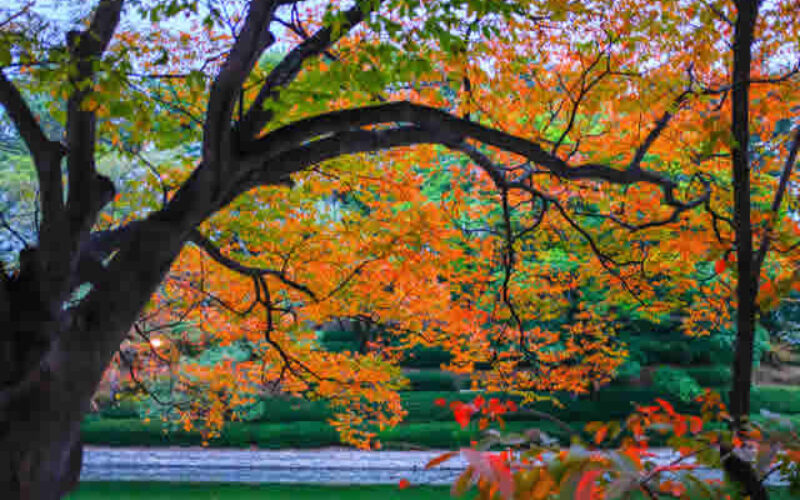
The vivid colors of autumn foliage are a direct result of this nutrient withdrawal. As green chlorophyll breaks down and fades, it unmasks yellow and orange carotenoid pigments that were present in the leaf all along.
Red and purple hues, by contrast, come from anthocyanins the plant actively produces in autumn, a process favored by bright sunny days paired with cool nights. Brown tones typically come from tannins left behind once the other pigments have faded.
Preparing Your Garden For Winter Dormancy
Knowing the biology behind dormancy makes it easier to support your landscape through the transition rather than work against it. A few thoughtful steps in fall can make a real difference in how your plants weather the winter and recover in spring.
Water deeply before the ground freezes, especially for evergreens, which continue to lose moisture through their needles even in cold weather. Apply two to four inches of mulch around the base of trees and shrubs to insulate roots and regulate soil temperature, keeping the mulch a few inches away from trunks to prevent rot.
Avoid heavy pruning of most woody plants in fall; instead, remove only dead, damaged, or diseased wood, and save major shaping cuts for late winter while the plant is still dormant. Spring-flowering shrubs are the exception, as they’re best pruned right after they bloom.
Stop applying nitrogen fertilizer in late summer and fall, since it can stimulate tender new growth that won’t have time to harden off before frost arrives. Clean up diseased foliage from garden beds to reduce the chance of disease carrying over, and consider testing and amending your soil in fall when conditions are workable.
Young trees with thin bark benefit from wrapping for added winter protection, and fall is also an ideal time to plant spring bulbs and many trees and shrubs. Leaving some perennial stems standing over winter offers both a food source and shelter for beneficial wildlife.
What Happens When Spring Growth Resumes
Dormancy isn’t permanent, and the same signals that triggered it in reverse bring it to an end. As soil warms, chilling requirements are satisfied, and daylight hours lengthen, ABA levels fall while gibberellin levels rise, flipping the hormonal balance back toward active growth.
The carbohydrates and nutrients a plant stored in its roots and woody tissue the previous fall become the fuel for this awakening, powering budbreak and the first flush of leaves until those leaves are mature enough to resume photosynthesis on their own.
Early signs of this recovery include swelling buds, the first hints of green at branch tips, visible sap flow in certain trees, new shoots emerging from perennial crowns, and the gradual unfurling of new leaves.
Understanding Winter Science Supports A Healthier Garden
Winter dormancy isn’t a sign that something has gone wrong in your landscape—it’s proof that your plants are doing exactly what they evolved to do.
From the first shortening days of autumn to the hormonal shifts and nutrient transfers happening out of sight, every part of this process exists to carry your garden safely through the cold.
Armed with this understanding, the fall tasks of watering, mulching, and light pruning start to feel less like chores and more like informed care.
Give your plants the support they need now, and you’ll be rewarded with stronger, more vibrant growth when the days lengthen and spring arrives once again.
home improvement ideas to consider (within our network: www.letsrenovate.com – new win):
eas to consider (complete directory – new win):


Frequently Asked Questions
-
Why do plants go dormant in winter?
Plants go dormant to survive cold temperatures and limited sunlight. Shortening days and falling temperatures trigger hormonal changes, led by abscisic acid, that halt growth, protect tissue from freezing, and conserve stored energy until conditions improve.
-
What triggers dormancy first, light or temperature?
Light is typically the first trigger. Phytochrome pigments detect shortening daylight hours before temperatures drop significantly, giving plants an early warning to begin preparing for winter.
-
Why do leaves change color before they fall?
Leaf color changes because chlorophyll breaks down as the plant withdraws nutrients for winter storage, revealing yellow and orange carotenoid pigments. Red and purple colors come from anthocyanins the plant produces fresh in autumn.
-
Do all plants go fully dormant in winter?
No. Trees and shrubs typically stay alive above ground in a dormant state, while many herbaceous perennials die back completely above ground and survive through roots, crowns, or bulbs underground.
-
Should I prune my plants in the fall?
Generally, avoid heavy pruning of most woody plants in fall. Remove only dead, damaged, or diseased wood, and save major pruning for late winter while plants are still dormant, except for spring-flowering shrubs, which are best pruned after they bloom.
-
How much mulch should I apply before winter?
A layer of two to four inches of mulch around the base of trees and shrubs helps insulate roots and regulate soil temperature. Keep mulch a few inches away from trunks to avoid trapping moisture against the bark.
-
Why shouldn’t I fertilize my garden in late fall?
Applying nitrogen fertilizer late in the season can stimulate tender new growth that won’t have time to harden off before frost, making the plant more vulnerable to cold damage.
-
What are the first signs that plants are coming out of dormancy?
Early signs of spring recovery include swelling buds, green tips emerging on branches, visible sap flow in certain trees, new shoots at the base of perennials, and the gradual unfurling of new leaves.
-
What is a chilling requirement, and why does it matter?
A chilling requirement is the amount of sustained cold exposure a plant needs before it can exit dormancy and begin growing again. It prevents plants from budding prematurely during a brief winter warm spell.
| Stage | Main Trigger | What Happens | Homeowner Action |
|---|---|---|---|
| Early Autumn | Shortening daylight sensed by phytochromes | Growth slows and bud set begins | Stop nitrogen fertilizing |
| Mid Autumn | Falling temperatures and rising abscisic acid | Cold hardiness increases and nutrients move to roots | Water deeply and apply mulch |
| Winter | Accumulated chill hours | Endodormancy and ecodormancy protect buds from premature growth | Avoid heavy pruning except dead wood |
| Spring | Warming soil and lengthening days | Gibberellins rise and stored nutrients fuel budbreak | Watch for swelling buds and new shoots |
Image Credit: by envato.com
end of post … please share it!
end of post idea for home improvement
view and analyze home improvement ideas at our LetsRenovate center
Helpful article? Leave us a quick comment below.
And please give this article a rating and/or share it within your social networks.