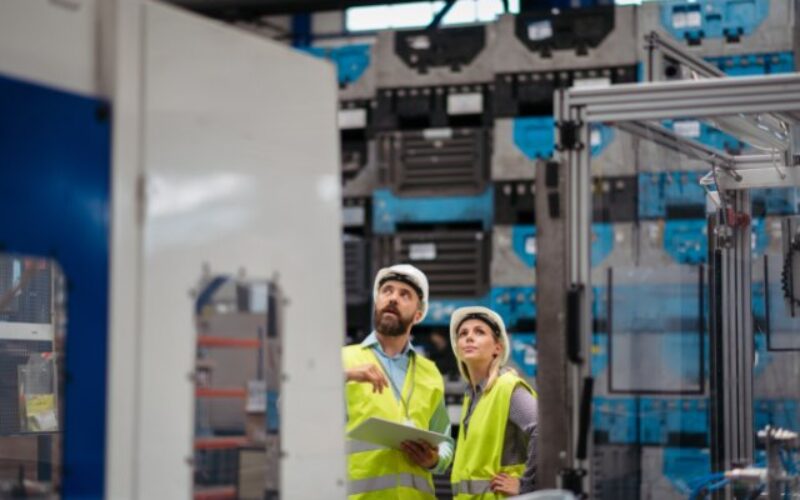

Maintenance costs are not determined solely by how equipment is used after it enters service. Many of those expenses are influenced much earlier, during the product design process. Decisions involving materials, component placement, accessibility, surface characteristics, and operating tolerances can determine how frequently a product needs attention and how difficult that work becomes. Understanding product design errors that lead to higher maintenance costs can help manufacturers develop products that perform reliably while reducing the time, labor, and replacement parts required throughout their service lives.
Choosing Materials Without Considering the Operating Environment
Material selection is one of the most consequential decisions in product development. A material may offer sufficient strength under controlled conditions yet perform poorly when exposed to the environment in which the finished product will actually operate. Moisture, chemicals, temperature fluctuations, abrasive particles, and repeated mechanical stress can all change how a material behaves over time.
For example, a component that regularly encounters corrosive substances may deteriorate much faster if corrosion resistance was not prioritized during design. Similarly, materials exposed to significant heat may warp, weaken, or lose important mechanical properties if their temperature limitations are overlooked. These problems can lead to more frequent inspections, repairs, and component replacements.
Design teams should therefore evaluate materials according to realistic operating conditions rather than focusing only on initial cost or basic mechanical requirements. Spending slightly more on an appropriate material can sometimes prevent considerably larger maintenance expenses later.
Making Routine Maintenance Difficult to Perform
Even reliable products eventually require inspections or replacement parts. When designers fail to consider how technicians will perform these tasks, simple maintenance procedures can become unnecessarily complicated.
A filter positioned behind several unrelated components, for instance, may require substantial disassembly just to complete a routine replacement. Fasteners located in confined spaces can make technicians spend additional time removing otherwise accessible parts. Components that require frequent inspection may also be difficult to see without removing protective panels or surrounding assemblies.
Maintenance accessibility should be considered throughout the design process. Frequently serviced components should be positioned where technicians can reach them safely and efficiently whenever possible. Removable panels, sensible component layouts, and appropriate clearance around service points can significantly reduce labor requirements over the product’s lifespan.
Ignoring Friction at Contact Surfaces
Components that slide, rotate, or repeatedly contact other surfaces are particularly vulnerable to friction-related wear. When friction is not adequately addressed, surfaces can gradually deteriorate, increasing clearances and reducing the accuracy or efficiency of the equipment.
Lubrication is one method of controlling friction, but it is not appropriate for every application. Some operating environments make frequent lubrication impractical, while others require surfaces that resist adhesion or contamination. Engineers may therefore need to consider surface treatments and coatings alongside the underlying material.
The appropriate solution depends heavily on how the component will be used. Factors such as operating temperature, substrate material, abrasion, chemical exposure, and desired release properties can influence how to select the right non-stick coating for a particular application. Treating the surface as an important functional part of the design rather than an afterthought can help reduce wear and maintenance demands.
Designing Products That Are Difficult to Clean
Cleaning is a maintenance requirement that can easily be underestimated during product development. Equipment used in food production, manufacturing, processing, packaging, and other industrial settings may accumulate grease, residue, dust, adhesives, chemicals, or production debris.
Poorly designed surfaces can make those contaminants much harder to remove. Deep recesses, unnecessary seams, sharp internal corners, exposed threads, and difficult-to-reach spaces can trap material. Maintenance teams may then need additional time, specialized tools, or stronger cleaning processes to restore the equipment to acceptable condition.
Designers can reduce these problems by considering cleanability from the beginning. Smooth transitions, accessible surfaces, appropriate finishes, and fewer unnecessary collection points can make routine cleaning faster while reducing the likelihood that buildup contributes to equipment problems.
Overlooking Vibration and Repeated Loading
A product can withstand a substantial static load and still fail prematurely under repeated smaller loads. Vibration and cyclic stresses can gradually loosen fasteners, fatigue materials, damage electrical connections, and accelerate wear at joints and interfaces.
Equipment containing motors, rotating components, pumps, or other moving systems may be especially susceptible. Even vibration originating outside the product can create maintenance issues if the design does not account for its operating environment.
Appropriate supports, fastening methods, isolation strategies, and material choices can help manage these forces. Testing products under realistic operating cycles is also important because some weaknesses become apparent only after thousands or millions of repetitions.
Making Troubleshooting More Complicated Than Necessary
Maintenance costs are influenced not only by how frequently equipment fails but also by how quickly technicians can determine what went wrong. Poor diagnostic access can turn a relatively simple fault into hours of troubleshooting.
Designers can improve serviceability by organizing components logically and making key inspection points accessible. Clear labeling and easily identifiable connections can also reduce confusion during maintenance. Depending on the product, diagnostic indicators or monitoring systems may provide additional information that helps technicians isolate problems before beginning extensive disassembly.
Documentation matters as well. A well-designed product becomes much harder to maintain when technicians lack accurate information about component locations, service intervals, adjustment procedures, or replacement requirements.
Treating Maintenance as an Afterthought
One of the most significant product design errors that lead to higher maintenance costs is waiting until development is nearly complete before considering serviceability. By that point, component locations, materials, assembly methods, and product dimensions may already be difficult or expensive to change.
Maintenance considerations are more effective when incorporated alongside performance, safety, manufacturability, and cost targets from the beginning. Designers can ask how components will wear, which parts will require routine attention, how technicians will reach them, and what happens when something eventually fails.
Feedback from maintenance technicians can be especially useful because they encounter problems that may not be obvious during initial design. Their experience can reveal awkward access points, recurring wear patterns, cleaning difficulties, and other practical issues that laboratory testing may overlook.
Designing with the entire product lifecycle in mind can ultimately reduce downtime, simplify repairs, extend service life, and lower the total cost of ownership. A product that is easier to maintain provides value long after it leaves the manufacturing floor, making thoughtful serviceability an important part of effective product design.
Image Credentials: by Halfpoint, 1915645709
end of post idea for home improvement
view and analyze home improvement ideas at our LetsRenovate center
Helpful article? Leave us a quick comment below.
And please give this article a rating and/or share it within your social networks.