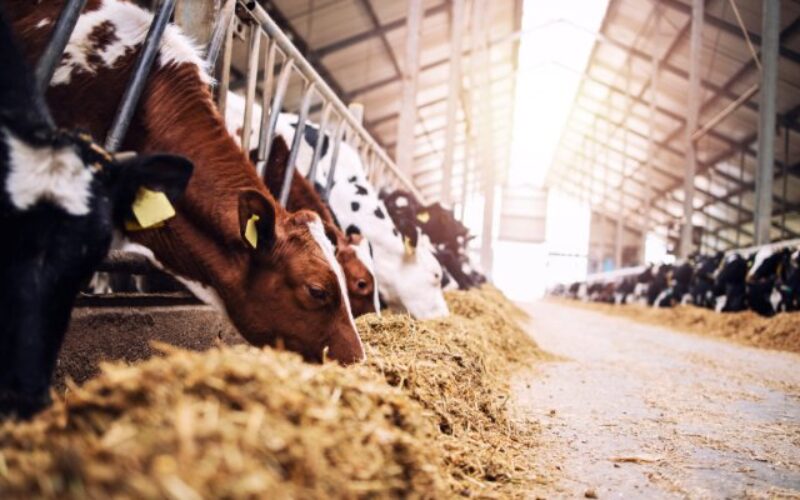
Farmers can improve performance by looking closely at the conditions that influence each animal throughout her lactation rather than relying on one quick fix. Feed quality matters, but so do water access, stall comfort, herd health, milking consistency, and breeding decisions.
When these areas work together, cows have a stronger foundation for steady production and long-term performance. Understanding how to increase milk production on your dairy farm starts with building reliable routines that meet the needs of the herd every day.
Prioritize High-Quality Nutrition
A dairy cow needs enough energy and nutrients to support maintenance as well as milk production. Rations should match the herd’s stage of lactation, body condition, age, and production goals. Fresh, consistent feed encourages intake and helps cows maintain the energy balance required for strong output.
Pay close attention to forage quality because it affects both intake and rumen function. Proper harvesting, storage, handling, and feed-out practices help preserve nutritional value and reduce spoilage. Regular feed evaluation can also help you identify changes before they affect herd performance.
Consistency matters just as much as ration formulation. Sudden changes in ingredients or feeding schedules can disrupt intake. Keep feed available throughout the day, push it within easy reach, reduce competition at the bunk, and monitor leftovers. A well-managed feeding program gives cows more opportunity to consume the ration they need.
Maintain Reliable Water Access
Milk contains a large amount of water, so dependable water access plays a direct role in dairy performance. Cows should be able to reach clean water easily after milking and throughout the day. Limited access can reduce drinking and may also affect feed intake.
Inspect waterers frequently for cleanliness and proper flow. Placement matters because dominant cows can discourage others from drinking when space feels restricted. Make water easy to reach from feeding and resting areas, and keep troughs positioned where cows can use them without creating excessive congestion.
Improve Cow Comfort and Rest
Comfortable cows spend more time resting, which supports productive herd behavior. Stalls should provide enough space for cows to lie down and rise naturally. Bedding should remain dry and inviting so cows choose the stall instead of standing for long periods.
Heat also deserves close attention. Warm conditions can reduce feed intake and make cows less comfortable. Fans, ventilation, shade, and appropriate cooling practices can help limit heat stress. Adjust cooling strategies as weather conditions change rather than waiting for visible signs of discomfort.
Walking surfaces influence comfort as well. Maintain alleys to reduce slipping and avoid unnecessary obstacles. Calm movement between the barn, alleys, holding area, and parlor helps cows conserve energy while reducing stress.
Create a Consistent Milking Routine
A predictable milking routine helps support efficient milk letdown and udder health. Train employees to follow the same preparation process during every shift. Gentle cow handling also helps keep the parlor calm and reduces disruptions that can interfere with normal milk release.
Milking equipment needs routine inspection and maintenance. Worn components, incorrect settings, vacuum issues, or sanitation problems can affect milking performance and increase udder health risks. Follow a regular maintenance schedule and address changes in milking time or equipment behavior promptly.
Cleanliness remains essential from cow preparation through equipment sanitation. Keep udders appropriately prepared, use sound milking procedures, maintain a clean environment, and monitor cows.
Support Herd Health Proactively
Healthy cows can direct more energy toward milk production. Preventive herd health programs help farmers identify problems early and reduce the production losses that often follow illness or injury. Work with qualified professionals to establish protocols that fit the herd and facility.
Watch cows closely for changes in appetite, movement, milk output, or behavior. Small changes may provide an early warning that an animal needs attention. Accurate records make those patterns easier to recognize across individual cows and groups.
Use Genetics To Strengthen the Herd
Genetic selection can improve dairy performance over time. The best cow breeds for dairy production will depend on farm goals, climate, facilities, milk market, and management style. Breed choice matters, but selection within a breed can be equally important.
Use breeding decisions to develop cows that fit your operation. Consider traits related to milk components, productive life, udder structure, fertility, and health. A balanced approach can create a herd that produces well without sacrificing durability.
Manage Reproduction and Transition Periods
Reproductive performance influences the herd’s lactation pattern and overall efficiency. Timely heat detection, appropriate breeding protocols, and accurate records help keep cows moving through productive cycles. Review reproductive performance regularly so emerging issues receive attention.
The transition period requires particularly careful management because cows experience major nutritional and physiological changes around calving. Provide comfortable housing and appropriate nutrition while minimizing avoidable stress. Close observation can help employees recognize cows that need additional attention.
After calving, monitor appetite, behavior, recovery, and milk output closely. A strong start to lactation can support later performance, while unresolved transition problems can limit production for an extended period.
Use Records To Guide Decisions
Good records turn daily observations into useful management information. Track milk output, feed intake where possible, health events, reproduction, and other performance indicators that matter to the operation. Review trends instead of reacting to a single unusual day.
Keep recordkeeping practical enough that employees can maintain it consistently. Reliable information supports better conversations with nutritionists, veterinarians, breeders, and other advisers.
Train Employees for Consistency
Even a strong management plan can fail when employees follow different procedures. Clear training helps everyone understand how their work affects cow performance. Demonstrate proper routines, explain the reason behind key steps, reinforce expectations during regular work, and invite questions.
Employees should also know how to report concerns. Workers who spend time around cows may notice changes before they appear in formal records. A simple communication process helps managers respond sooner.
Build Production Through Daily Management
Increasing milk output requires a coordinated approach that supports cows throughout each day and each stage of lactation. Nutrition, water, comfort, health, milking practices, reproduction, genetics, records, and employee consistency all influence the result, but improvement comes from managing each area according to the needs of the operation. Focus on repeatable practices and evaluate changes through herd performance rather than chasing short-term solutions. To understand how to increase milk production on your dairy farm, focus on fundamentals that keep cows comfortable and well-fed so they can perform consistently over time.
Image Credentials: By littlewolf1989, 430378383
end of post … please share it!
end of post idea for home improvement
view and analyze home improvement ideas at our LetsRenovate center
Helpful article? Leave us a quick comment below.
And please give this article a rating and/or share it within your social networks.