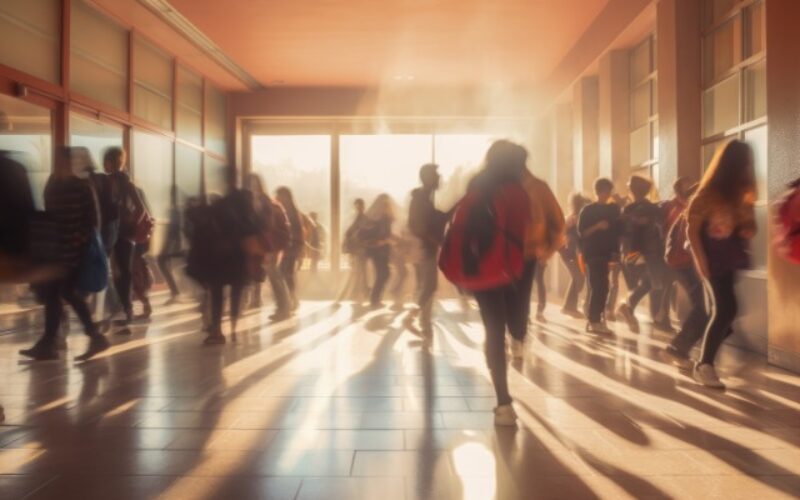
Even small bottlenecks add up, stealing instructional minutes and creating avoidable stress for students and staff. Most passing-period pileups stem from design friction: narrow pinch points, blind corners, and stop-and-go zones. With a few design-minded tweaks, schools can make passing periods calmer, safer, and easier to supervise.
Start With a “Hotspot Map,” Not a Blanket Rulebook
A practical way to reduce collisions is to identify school hallway hotspots—the specific places where traffic repeatedly clumps. For a week, simply notice where hallway flow repeatedly slows; those are the spots the building is “telling” you to fix.
You’ll notice pockets forming near stair landings, narrow intersections, the water fountain alcove, the doorway to a popular classroom, or the “locker canyon” where doors swing open into the flow. Map those high-traffic pinch points so your fixes stay specific instead of turning into a building-wide ‘walk faster’ message. Otherwise, you’ll end up with a building-wide “walk faster” message that students easily ignore.
Reshape Movement in the Places That Actually Jam
When schedules allow, even a small tweak, like a brief stagger between grade levels, can ease the peak squeeze in the tightest corridors. Clear sightlines at corners matter too; better lighting, removing visual clutter, or adding a mirror can prevent “surprise meetings” that trigger sudden stops.
Tie Hallway Flow to the Bigger Safety Plan
Another high-impact tweak is building “pause space” away from doorways: if students have a natural spot to wait or talk, they’re less likely to block the stream at classroom thresholds. This is also a good moment to connect hallway routines to the broader security measures to help improve school safety already in place. Congestion makes it harder to supervise, clogs entry/exit paths, and pulls adults into crowd control during the busiest minutes.
Quick Hallway Fixes That Reduce Pileups
- Place supervision at the end of a congested zone (where students exit) to maintain continuous flow.
- Mark a small “keep clear” buffer near the busiest classroom doors so lines don’t spill into traffic.
- Use one or two simple cues at the tightest turns (like “single file at corners”) rather than signs everywhere.
- Add a gentle two-minute warning sound to reduce last-second sprints that cause collisions.
Don’t Overlook Lockers: Swing Space Is Traffic Space
Once you know where your school hallway hotspots are, you can prevent daily pileups without turning the whole building into a maze. Locker areas are a repeat culprit because they combine stopping, door swing, and friend clusters in a narrow corridor. Even when students are trying to be careful, open locker doors narrow the path and force others to twist to the side. Eventually, it becomes a game of dodge the backpack or instrument case, where there’s no winner.
When you repair, replace, or relocate lockers, choose durable materials and hardware that keep doors working smoothly and traffic moving day after day. That’s where details like door strength, hinges, ventilation, and finish durability start to matter for day-to-day flow. This is especially true when you’re thinking about durable lockers for high-traffic school halls that won’t stick, sag, or slow everyone down.
Image Credentials: GB, 697080361
end of post … please share it!
end of post idea for home improvement
view and analyze home improvement ideas at our LetsRenovate center
Helpful article? Leave us a quick comment below.
And please give this article a rating and/or share it within your social networks.