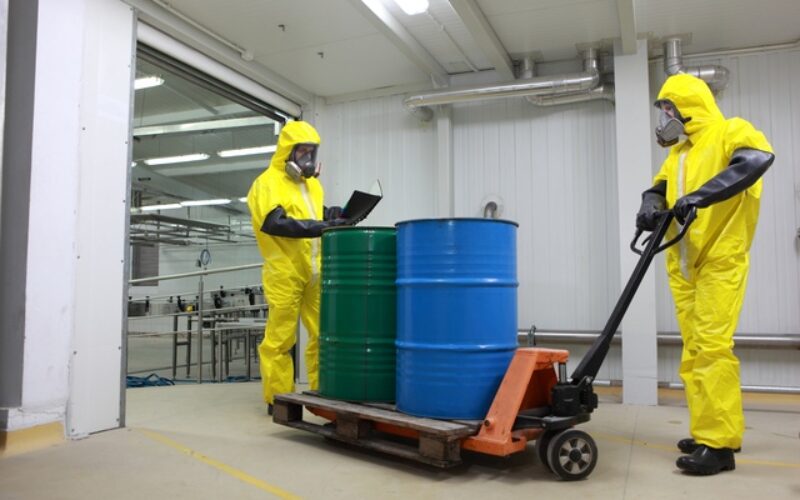

Waste management problems often trace back to outdated practices, unmonitored disposal habits, or a lack of scalable systems for handling large byproduct volumes. Improving facility waste operations helps businesses save money, avoid violations, and better manage operational risks.
Industrial plants and commercial warehouses can build stronger systems by prioritizing methods tailored for their specific output. From equipment upgrades to disposal training, better waste practices start with proactive decision-making.
Redesigning Facility Layouts for Waste Flow
Reconfiguring floor plans helps redirect high-volume waste zones toward centralized holding or treatment areas. Large-scale factories dealing with chemical waste, packaging debris, or heat-sensitive residue often improve flow by mapping output sources and container placement side-by-side. Transitioning away from scattered bins or inconsistent chute designs eliminates collection delays and reduces safety risks for workers.
One way factories and businesses can improve waste handling is by integrating sorting zones directly into packaging or processing areas. Staff can discard materials without leaving workstations, which minimizes spillage and maintains efficiency. Close proximity between output and collection often makes disposal more consistent and simplifies tracking for waste audits.
Investing in On-Site Waste Treatment Equipment
Another way factories and businesses can improve waste handling is with heat or pressure-based equipment to recover usable compounds from production byproducts. Recovery methods reduce both material purchases and regulatory dumping costs. As a result, treatment units can generate long-term savings while also supporting sustainability goals.
Installing solvent recyclers, compactors, or water filtration systems builds internal resilience for facilities that regularly produce liquid or semi-solid waste. Instead of relying entirely on third-party hauling or dumping schedules, on-site processing allows plant managers to control volume, quality, and timing. Facilities that adopt solvent recycling solutions for efficiency and sustainability often reduce dependence on external haulers by transforming recoverable waste into usable inputs with fewer emissions and delays.
Training Teams To Follow Waste-Specific Protocols
Supervisors should train staff to recognize how handling procedures differ depending on the waste form, hazard category, and production frequency. Waste oil, shredded plastics, spent solvents, and scrap metals each require distinct transportation and containment rules. Teams must know how to label, log, and transfer items without violating internal or municipal policies.
When workers follow disposal steps matched to their exact tool set or work cell, long-term compliance increases. Printed charts, color-coded bins, and small visual reminders create an intuitive system that cuts down on disposal confusion.
Monitoring Volume and Identifying Waste Trends
Automated volume sensors or disposal logs give operators useful insights into when and where waste increases. Production errors, equipment wear, and inventory changes often correlate with surges in discarded material. Managers can adapt quickly when data points signal spikes in packaging waste, fluid leaks, or defective batches.
Trend analysis also supports long-term upgrades when multiple shifts or locations produce recurring bottlenecks. A sudden rise in solvent loss might reflect a seal failure or overuse in production. Regular monitoring keeps facilities alert and helps leadership decide where to invest in training or equipment.
Image Credentials: by endostock, 39401895
end of post idea for home improvement
view and analyze home improvement ideas at our LetsRenovate center
Helpful article? Leave us a quick comment below.
And please give this article a rating and/or share it within your social networks.