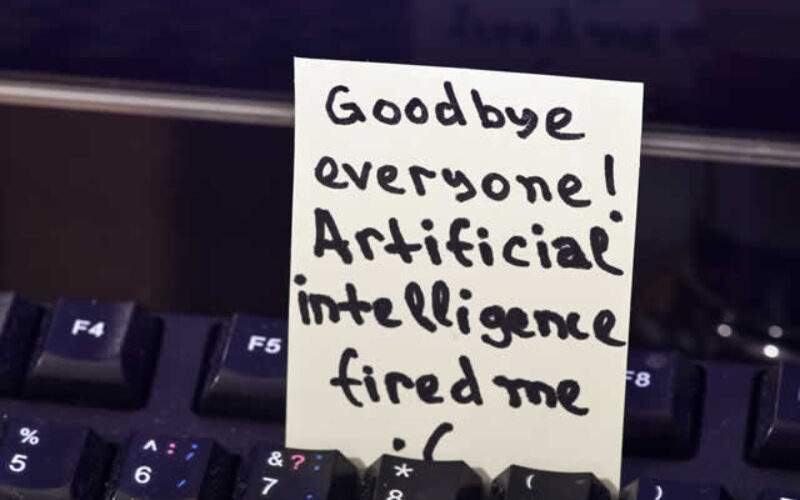
Change often brings uncertainty, but understanding these structural shifts can deeply empower you to make nurturing choices for your professional future.
Instead of replacing entire careers overnight, this new technology typically steps in to handle highly repetitive tasks. This gentle transition gives you more room to focus on the deeply human aspects of your role, like connecting with clients, guiding team members, or solving nuanced, creative problems.
By looking closely at how different fields are adapting, we can cultivate a healthy, forward-thinking approach to our daily work.
Taking the time to understand these professional transformations helps alleviate the anxiety associated with new technology.
We will explore exactly which jobs are experiencing the most change, how fresh opportunities are blossoming across various industries, and what actionable steps you can take to grow comfortably alongside these helpful new tools.
Jobs Most Susceptible To AI Automation
Certain career paths are naturally experiencing more friction and adjustment as artificial intelligence becomes more capable. The careers most exposed tend to be knowledge-work jobs filled with repetitive language processing, data entry, or administrative tasks.
Software can quickly process large volumes of information, making it highly effective at organizing files, answering basic queries, or sorting through numerical data.
The most profoundly affected careers currently include interpreters and translators, writers, customer service representatives, web developers, and administrative support roles. Because these positions rely heavily on generating text or writing straightforward code, automated tools can easily step in to produce first drafts or handle initial client interactions.
Financial managers and legal analysts are also seeing clear shifts, as algorithms can swiftly scan complex documents and crunch numbers with remarkable accuracy.
Understanding why these specific roles change helps demystify the technology. Artificial intelligence thrives in environments where work is heavily rules-based and easy to standardize.
When software handles basic ticket resolution, scheduling, or data entry, the people in these roles spend their valuable time on relationship management and higher-level decision making. The technology acts as a supportive assistant, handling the tedious chores so you can focus on the bigger picture.

Careers Providing Human Connection And Judgment
While some roles shift to accommodate automated assistance, jobs that rely on physical presence, deep empathy, and complex human trust remain remarkably resilient.
Work that requires a warm touch, physical dexterity, or emotional intelligence simply cannot be replicated by a machine. These foundational roles form the bedrock of our communities and rely on the unique care that only a person can provide.
Healthcare professionals, teachers, and social workers continue to see strong stability in their fields. Even when clinics introduce new software to assist with diagnostics, documentation, and patient scheduling, the technology serves to support the clinician rather than replace them.
A computer might help organize a patient’s chart, but it cannot hold a patient’s hand or offer comforting reassurance during a difficult diagnosis.
Similarly, skilled trades, construction, and delivery services operate in dynamic, physical environments that require constant hands-on problem solving. For these professionals, new technology serves as a helpful productivity tool.
A smart application might optimize a delivery route or help a plumber order parts more efficiently, gently enhancing their daily workflow while leaving the core, hands-on work completely intact.
The Rise Of New AI-Driven Roles
Just as a garden naturally evolves with the changing seasons, the job market is blooming with entirely new professional opportunities. Companies are actively seeking people to guide, maintain, and ethically manage these complex software systems.
This technological shift is creating robust demand for artificial intelligence engineers, cybersecurity specialists, cloud architects, and data analysts.
Beyond purely technical roles, we are seeing a fascinating emergence of positions centered around human guidance and ethical oversight. Organizations are hiring specialists dedicated to artificial intelligence ethics to ensure these tools are used responsibly and fairly.
Prompt-focused jobs are also gaining traction, where professionals use their strong communication skills to properly instruct and guide software to produce accurate, helpful outputs.
Research indicates that demand is steadily rising for analytical and creative roles that can be augmented by these new tools. Instead of searching for an entirely automated-proof career, the healthiest approach is to look for augmented work.
Professionals who learn to blend their unique creative insights with the speed of automated software find themselves in highly desirable, resilient positions.
Adapting To An AI-Integrated Workforce
Feeling unsure about your career path right now is completely natural, but taking small, intentional steps can help you build confidence and resilience. The most effective way to respond to these industry changes is to learn how to use these new tools within your specific field.
By treating the software as a collaborative partner rather than a competitor, you can greatly reduce your daily workload and increase your overall productivity.
Focus your energy on cultivating the deeply human skills that machines cannot replicate. Nurturing your abilities in critical thinking, interpersonal communication, careful negotiation, and hands-on problem solving will serve you incredibly well.
These soft skills are the true currency of the future workplace, allowing you to navigate complex workplace dynamics and build meaningful relationships with your peers.
Gradually move your career focus toward work that involves careful oversight, human judgment, and managing complex exceptions. If your current role involves heavy repetition, look for opportunities to step into advisory, managerial, or client-facing responsibilities.
By gently pivoting your daily tasks toward the human elements of your business, you secure your place as an invaluable, irreplaceable member of your team.
other related articles of interest:
Small Startups to Watch in 2026: AI, Home, and Health Trends
The AI Advantage How Understanding AI Can Catapult Your Career
Thriving Alongside Artificial Intelligence
Navigating this new professional landscape requires a gentle blend of patience, continuous learning, and self-compassion. The tools entering our workplaces are designed to handle the mundane, freeing up our mental energy for the creative and compassionate work we do best.
By embracing these supportive technologies, you can cultivate a more balanced, fulfilling professional life.
Take a moment this week to explore one new tool relevant to your industry. You might find that it effortlessly handles a task you previously dreaded, leaving you with more time to focus on the projects that truly spark your joy and professional passion.
Image Credit: AI’s impact on the job market by envato.com
end of post … please share it!
end of post idea for home improvement
view and analyze home improvement ideas at our LetsRenovate center
Helpful article? Leave us a quick comment below.
And please give this article a rating and/or share it within your social networks.