Here are some of the reasons you should consider including it under your list of qualifications.
Welding Experience Shows Technical Ability
Welding requires you to understand how materials respond to heat and how different joints affect the finished work. You also need to read measurements accurately before you begin. Sounds pretty technical, right?
Adding welding to your resume shows that you’ve spent time developing a skill that relies on knowledge as much as physical control. An employer sees someone who understands equipment and knows how to apply training to a hands-on task.
Welders Learn to Work with Precision
A small error in angle or heat can weaken a weld, so precision becomes part of the job from the start. You learn to watch the work closely and adjust before a minor issue ruins the piece.
What does that tell a hiring manager? It shows that you pay close attention while working and take accuracy seriously. Those habits transfer well to jobs where measurements or equipment settings leave little room for careless mistakes.
Safety Becomes Part of How You Work
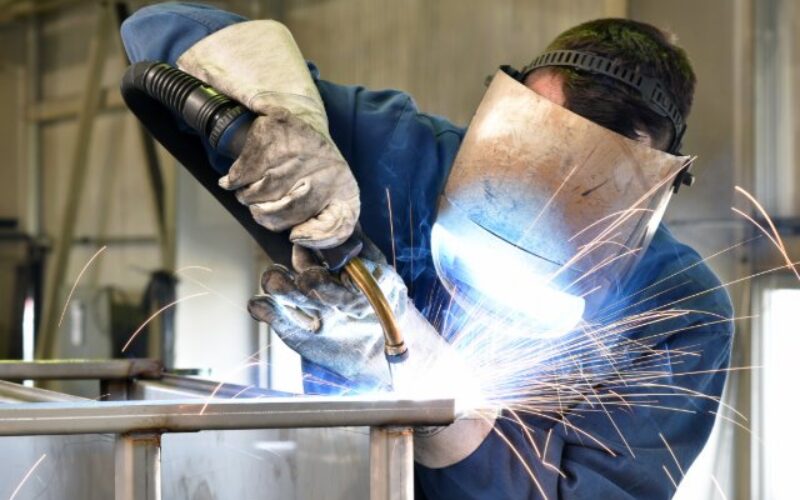
You don’t get far in welding without respecting safety procedures. Protective equipment needs to fit correctly, and your workspace has to account for sparks or heated metal. No shortcuts here.
When welding appears on your resume, it tells employers that you’ve worked in an environment where following safety rules protects both you and the people nearby. That experience carries value in any workplace that uses tools, machinery, or hazardous materials.
Welding Appears in Many Industries
Welding has applications across many fields, including the automotive industry. If you’re applying for a job in an industry that works with metal, listing welding experience on your resume shows you understand part of its daily operations.
That still holds value even when the position doesn’t require you to weld. For example, an automotive technician who understands welded components has added insight when inspecting damaged frames or planning repairs.
The Skill Shows You Can Solve Problems
Not every weld goes according to plan. Metal thickness or an awkward joint can change how you handle the work. So what do you do? You evaluate the problem and adjust your technique instead of repeating the same mistake.
Employers look for people who respond thoughtfully when a task gets complicated. Welding experience gives you a concrete example to discuss during an interview rather than relying on a vague claim that you’re good at solving problems.
Give Employers More to Notice
Your resume needs to show what you bring to the job, and practical skills give employers useful details to consider. Welding demonstrates technical knowledge and careful work without requiring a long explanation.
Why welding is a great skill to add to your resume also extends beyond welding positions. Even when the job listing never mentions a torch, the training behind the skill shows that you know how to learn difficult work and apply it responsibly.
Image Credentials: industrieblick, 296099066
end of post … please share it!
end of post idea for home improvement
view and analyze home improvement ideas at our LetsRenovate center
Helpful article? Leave us a quick comment below.
And please give this article a rating and/or share it within your social networks.