Quick answer:
The money system runs on central banks that set policy and commercial banks that create most money through lending. To secure your financial position, you need to understand how money loses value through inflation, diversify your savings and investments, and stay informed about shifts like digital currencies.
Understanding how money works isn’t reserved for economists or bankers—it’s essential knowledge for anyone who wants to protect their financial future.
The truth is, the money system feels complicated by design. But once you grasp a few core principles, you can make confident decisions about saving, spending, and investing.
This guide breaks down the machinery behind modern money in plain language, then shows you practical ways to safeguard your financial position.
Let’s walk through it together, one piece at a time.
- post content
- The Pillars That Hold the System Together
- How Money Actually Gets Created
- Why Your Dollar Buys Less Over Time
- How Global Finance Connects Your Wallet to the World
- Practical Strategies to Secure Your Financial Position
- The Rise of Digital Currencies
- Taking Control of Your Financial Landscape
- FAQs
The Pillars That Hold the System Together
At the heart of every modern economy sit two types of institutions: central banks and commercial banks. They work in tandem, but they serve very different roles.
A central bank—like the U.S. Federal Reserve, the European Central Bank, or the Bank of England—acts as the architect of a nation’s monetary policy. It sets interest rates, manages the money supply, and steps in during financial crises.
When the Federal Reserve raised its benchmark rate to a range of 5.25% to 5.50% in 2023, it was deliberately cooling inflation by making borrowing more expensive (Federal Reserve, 2023).
Commercial banks, on the other hand, are the institutions most of us interact with daily. They hold your deposits, issue loans, and process payments. While central banks set the rules of the game, commercial banks are the players who keep money circulating through the economy.

How Money Actually Gets Created
Here’s a fact that surprises most people: the vast majority of money isn’t printed by governments. It’s created by commercial banks when they make loans.

When you deposit $1,000 in a bank, the bank doesn’t keep all of it locked in a vault. Under a system known as fractional reserve banking, it lends most of that money to someone else.
That borrower spends it, the recipient deposits it in another bank, and the cycle repeats. Through this process, the original deposit multiplies across the economy.
The Bank of England confirmed this directly in a landmark paper, stating that "the majority of money in the modern economy is created by commercial banks making loans" (Bank of England, 2014).
Understanding this helps explain why credit availability has such a powerful effect on economic growth—and why financial crises often begin when lending suddenly freezes.
Why Your Dollar Buys Less Over Time
Inflation is the steady rise in prices across an economy, and it directly erodes the purchasing power of your money. A dollar today simply doesn’t stretch as far as it did a decade ago.
The reasons vary—rising demand, supply shortages, or an expanding money supply. In 2022, U.S. inflation peaked at 9.1%, the highest rate in roughly 40 years, driven by pandemic-era supply disruptions and energy price spikes. It has since cooled, but the experience reminded millions of people how quickly savings can lose value.
Deflation, the opposite force, occurs when prices fall. It might sound appealing, but it can be just as damaging. Falling prices often discourage spending and investment, which can stall economic growth. Most central banks aim for a modest, stable inflation rate—typically around 2%—to keep the economy healthy.
How Global Finance Connects Your Wallet to the World
No economy operates in isolation anymore. A policy decision in Washington can ripple through markets in Tokyo, London, and São Paulo within hours.
The U.S. dollar plays an outsized role here. As of 2024, it still accounted for roughly 58% of global foreign exchange reserves, making it the world’s dominant reserve currency (International Monetary Fund, 2024).
When the dollar strengthens or weakens, the effects spread far beyond American borders, influencing everything from oil prices to the cost of imported goods in your local store.
This interconnectedness means that events like geopolitical conflicts, trade disputes, or shifts in central bank policy abroad can affect your personal finances at home. Staying aware of these global currents helps you anticipate changes rather than be caught off guard.
Practical Strategies to Secure Your Financial Position
Knowledge is only useful when you act on it. Protecting your money in this system comes down to a few proven principles.
Build an emergency fund first. Financial experts widely recommend keeping three to six months of living expenses in an accessible, liquid account. This cushion protects you from having to borrow at high interest rates when unexpected costs arise.
Next, fight inflation by putting your money to work. Cash sitting in a low-interest account quietly loses value every year. Diversified investments—such as index funds, retirement accounts, and other assets—have historically outpaced inflation over the long term.
The key word is diversified: spreading your money across different asset types reduces your risk if any single investment falters.
Finally, manage debt strategically. High-interest debt, especially from credit cards, can erode your wealth faster than almost anything else. Paying it down should be a priority before chasing aggressive investment returns.
The Rise of Digital Currencies
The money system isn’t standing still. Digital currencies represent one of the most significant shifts in decades.
Cryptocurrencies like Bitcoin operate outside traditional banking, using decentralized networks rather than central authorities. They offer new possibilities but also carry notable volatility and risk.
Meanwhile, central banks are exploring their own versions—central bank digital currencies, or CBDCs. According to the Atlantic Council, 134 countries representing 98% of global GDP were exploring a CBDC as of 2024 (Atlantic Council, 2024).
These developments could reshape how we save, spend, and transfer money in the years ahead. For now, the wise approach is to stay informed and treat highly volatile digital assets as a small, calculated portion of a broader financial plan rather than a foundation.
Taking Control of Your Financial Landscape
The money system can feel like a maze, but it follows logical rules once you understand its parts. Central banks set the direction, commercial banks create and circulate money, inflation quietly shapes the value of what you hold, and global forces tie it all together.
Your financial security doesn’t depend on predicting every twist in the economy. It depends on building solid habits: keeping an emergency fund, investing in diversified assets, managing debt wisely, and staying curious about changes like digital currencies.
Start with one step this week—open a high-yield savings account, review your investments, or simply track where your money goes. Small, informed actions compound into lasting financial strength.
other related articles of interest:
How to Make Money in Between Jobs Without Burning Out
From Stress to Stability: Transforming Your Approach to Money
Frequently Asked Questions
-
How does money actually get created in the economy?
Most money is created by commercial banks when they issue loans, not by governments printing cash. Under fractional reserve banking, banks lend out most of the deposits they receive, and that money multiplies as it circulates. The Bank of England confirmed that commercial bank lending creates the majority of money in the modern economy (Bank of England, 2014).
-
What is the best way to protect my savings from inflation?
The most effective approach is to keep your money working rather than sitting idle. Maintain an emergency fund for short-term needs, then invest the rest in diversified assets like index funds and retirement accounts that have historically outpaced inflation over time. Diversification reduces your risk if any single investment underperforms.
-
Are digital currencies a safe place to store my money?
Cryptocurrencies like Bitcoin are highly volatile and carry significant risk, so they’re generally not suitable as a primary store of savings. If you choose to hold them, treat them as a small portion of a diversified plan. Central bank digital currencies (CBDCs), now being explored by 134 countries, may offer more stability in the future (Atlantic Council, 2024).
-
Why do central banks raise interest rates?
Central banks raise interest rates to slow inflation. Higher rates make borrowing more expensive, which reduces spending and demand, helping bring prices under control. The U.S. Federal Reserve raised its benchmark rate to a range of 5.25% to 5.50% in 2023 specifically to cool high inflation (Federal Reserve, 2023).
-
How much should I keep in an emergency fund?
Most financial experts recommend keeping three to six months’ worth of living expenses in an accessible, liquid account. This cushion protects you from taking on high-interest debt when unexpected expenses arise, giving you a stable financial foundation before you invest elsewhere.
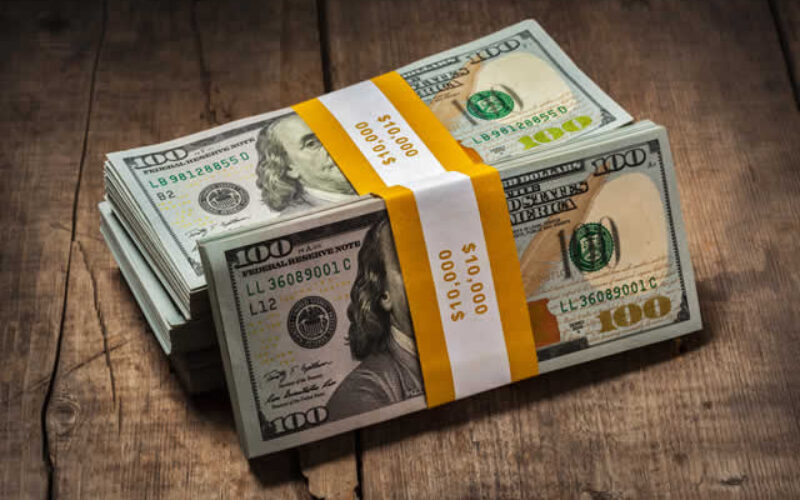
Image Credit: how the money system works by envato.com
end of post … please share it!
end of post idea for home improvement
view and analyze home improvement ideas at our LetsRenovate center
Helpful article? Leave us a quick comment below.
And please give this article a rating and/or share it within your social networks.