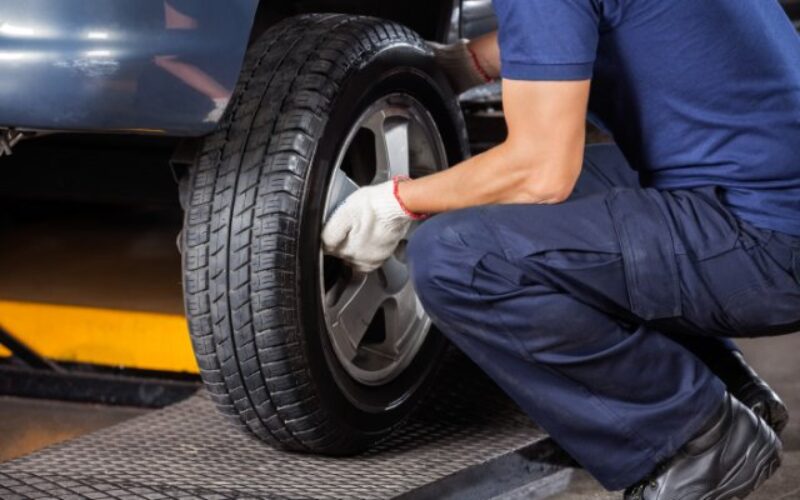
Knowing what to check before replacing one of your tires makes the decision easier and protects the balance of the set. The goal is to match the new tire closely to what is already on the vehicle.
Confirm the Correct Tire Size
Start with the size printed on the sidewall or listed on the driver-side door placard. The replacement must match the specified width, aspect ratio, and wheel diameter. A different size changes how the tire sits on the wheel and may affect speedometer accuracy. Even a small variation alters clearance around the suspension or wheel well.
Compare Tread Depth and Tire Condition
Next, measure the tread on the other tire sharing the same axle because a large difference changes the rolling diameter. That mismatch may affect stability, particularly on vehicles with all-wheel drive. Inspect the remaining tire for cracks, bulges, or drying rubber before pairing it with a new one. The sidewall date code helps confirm whether age has weakened a tire that still has usable tread.
Identify What Caused the Tire Damage
Before installing a replacement, determine what damaged the original tire. A puncture may be isolated, but uneven wear could point to an alignment issue that will shorten the new tire’s life. Wheel damage should be corrected before mounting fresh rubber. Fixing the underlying problem protects the replacement from premature wear.
Match the Performance Characteristics
The replacement should match the load index and speed rating required by the vehicle. Those ratings show how much weight the tire is designed to carry and the speed range it is built to handle. Tread pattern and rubber compound influence grip, so a major difference may change braking or cornering behavior. That concern is part of whether you should mix different tire brands on the same car, since brand differences sometimes come with varying performance traits.
Consider the Vehicle’s Drivetrain
Drivetrain design affects how much tire variation the vehicle will tolerate. All-wheel-drive systems are usually more sensitive to differences in rolling circumference than two-wheel-drive layouts. Too much variation strains drivetrain components as the system tries to manage unequal wheel speeds. The owner’s manual provides the manufacturer’s limits for allowable tread differences.
Decide Whether One Tire Is Enough
A new tire paired with a heavily worn tire may create enough tread difference to justify replacing both tires on the axle. When one replacement is appropriate, its position should support predictable handling. Many tire professionals prefer to place the deepest tread on the rear axle to reduce rear-axle traction loss on wet roads. That placement requires rotating another tire rather than installing the new one at the damaged tire’s original location.
A replacement tire should restore confidence behind the wheel. It shouldn’t introduce a new concern. Paying attention to what to check before replacing one of your tires makes that outcome far more likely. When the new tire works in harmony with the rest of the set, the vehicle remains predictable where it counts most.
Image Credentials: by Tyler Olson, File #95162507
end of post … please share it!
end of post idea for home improvement
view and analyze home improvement ideas at our LetsRenovate center
Helpful article? Leave us a quick comment below.
And please give this article a rating and/or share it within your social networks.