Home     Log in    XML, RSS Subscribe Feed (RSS)     XML, RSS Comments Feed

Archive for the ‘Autos Express’ Category

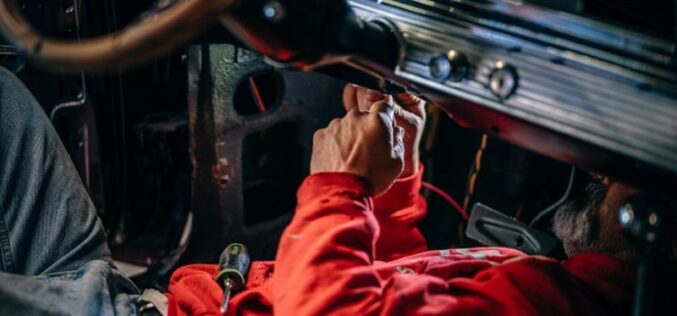
Tried & True Auto Advice May Be False

March 15th, 2010 by Matthew C. Keegan | 1 Comment | Filed in Autos Express

Passenger vehicles have been made for more than a century now and over that time cars have changed dramatically. Much of the advice given years ago has changed too including how often you should change your oil (3000 miles no longer applies) or warming up your car for five minutes before heading out.

Today’s Engineering

Once considered “tried and true” automotive advice, much of what we once believed is no longer relevant and could be costing you money. 21st century engineering has changed the way we maintain and drive our cars so let’s take a look at 5 myths as well as 5 money savings truths courtesy of the Ford Motor Company.

What sort of myths do you believe?

MYTH: Cars need oil changes every three months or 3,000 miles.

False: That used to be true, but not with newer cars. Because of synthetic oils that don’t break down as quickly, consumers actually don’t need oil changes as often – more like every 5,000 to 7,500 miles. (There may be two recommendations for oil-change intervals: one for normal driving and one for hard use. Check your maintenance guide to be sure.)

SAVE: Either way, there’s a considerable savings here: Let’s say you’re an average consumer who drives 12,000 miles a year, which means you would need about four oil changes a year under the old formula. With the new extended mileage, consumers need only about two oil changes a year, cutting their bill for oil changes in half – you could pocket upward of $50 a year or $650 in the lifetime of your car and do something to help the environment by saving oil.

MYTH: You need to let your vehicle engine warm up in cold weather.

False: Your vehicle’s engine only needs a warm-up period of about 10 seconds – you’re actually the only one who may feel chilly. The engine warms up while you drive. Running your car any longer beforehand is just a waste of gas.

SAVE: Depending on engine size, temperature and other variables, modern cars can use about a third of a gallon of gas per hour while idling. By giving up that 10-minute idle every weekday morning, you could save more than a gallon a month – $32 a year or $416 over the life of the vehicle.

MYTH: Premium gas is a treat for your car.

False: Unless your vehicle is specifically tailored to take advantage of the higher octane level in the fuel, you’re wasting your money. Go by what is recommended in your owner’s manual and leave it at that.

SAVE: At current gas prices, drivers may save up to $150 a year by opting for unleaded gas instead of premium.

MYTH: The number listed on the sidewall of your tire is the recommended tire pressure.

False: In most cases, this is actually the maximum pressure allowed for that tire. The recommended amount of pressure is usually listed on the inside door panel – check your owner’s manual to be sure.

SAVE: The government estimates that the average driver’s tires are underinflated by 26 percent. Generally, underinflated treads lower gas mileage about a half percent for each pound lacking when the pressure of all four tires is added up. An average driver with underinflated tires could add $79 a year to his or her fuel bill – or more than $1,027 in the lifetime of the vehicle. You could also save nearly half a barrel of crude oil per year by keeping your tires inflated to the manufacturer’s recommended level. Per the EPA, one barrel of crude oil equals 42 gallons of gasoline.

MYTH: Buy gas in the morning and you’ll save money.

False: The old adage was to fill up in the morning when gas was coolest and most dense because gas is sold by volume and you would get more gas for your buck.

But gas is sold in underground, nonmetallic tanks that typically hold about 10,000 gallons, and it will take a lot of sunlight to raise the temperature even a degree. (However, pumping your gas when it’s cooler does mean less release of vapors, which is better for the environment.)

SAVE: Do your research before buying. Ford’s SIRIUS Travel Link™ sorts gas stations by price on the navigation screen, but Web sites like MSNAutos.com can also help drivers navigate to bargains. In our quick research, we found two gas stations in New York City – less than a mile apart – with 30 cents per gallon price difference. If you know before you go and fill up for less every time, it could result in $227 in your pocket annually, or $2,951 saved over the lifetime of your car.

Ford Calculations

Ford says that by eradicating these myths drivers could save more than $500 annually or more than $6600 over a twelve year period driving the same car. For their estimation, Ford selected their 2010 Ford Taurus, a full size sedan returning 18 mpg city/28 mpg highway with gas averaging $2.70 per gallon.

Of course, your results will be different depending on the make, model and year of your car as well as miles driven. Check out the EPA fuel economy tabulator for your car’s information.

Photo Credit: Asif Akbar


Tags: , , , , , , , ,

Acura TSX: Baseline Luxury!

March 12th, 2010 by Matthew C. Keegan | 1 Comment | Filed in Autos Express

Luxury car buyers remain in the market, but like the astute consumers many are, value is also important to them. Honda’s Acura line has the right blend of luxury, price and reliability luxury buyers seek, with the TSX sedan offering the perfect entry point to this premium brand.

Based on a slightly shorter version of the platform underpinning the Honda Accord – indeed the Acura TSX is sold as the Accord in Europe – the five-passenger sedan features optimized suspension tuning for superior handling and cornering. A standard 2.4L I4 engine is paired with a six-speed manual or optional five-speed automatic transmission, the latter with paddle shifters for drivers seeking a more engaging experience.

In the cabin, the spacious interior is nicely laid out with easy to read displays, an attractive and sensible center stack, and comes optionally equipped with a navigation screen that pops up on the dashboard. That latter feature is part of an inclusive technology package which includes a voice recognition navigation system, real time traffic and weather, rear view camera and a Zagat Survey guide to help drivers review a local list of fine dining destinations.

Bluetooth connectivity means that a hands free call to a choice restaurant is accomplished via verbal command with the navigation display returning the best route there, adjusting for current traffic delays and detours. Acura claims that three-quarters of TSX buyers choose this package which also includes an upgrade to more supple Milano leather.

Driver and front passenger seating is firm, yet comfortable, offering ample bolstering with memory and heating features included, but lacking the cooling feature found in the RL. Rear seating is tight, even somewhat uncomfortable for six-foot tall passengers, which may move some buyers to the slightly larger and more expensive TL model.

A smooth ride and decent steering may not be enough for the TSX buyer, which is why Acura now offers an optional 3.5L V6 engine, the standard powerplant found in the TL. The V6 offers 280 horsepower, a vast improvement over the I4’s 201 horses. Importantly, there is only a one mpg difference in gas mileage between the two engine choices.

Trunk storage space is just under thirteen cubic feet, just enough room for three or four moderate sized suitcases stacked side by side. Additional storage space can be realize via the 60/40 split folding rear seat.

Like Honda, Acura scores at the top of all crash test ratings as the TSX comes equipped with stability and traction control as well as anti-lock brakes with brake assist. With a beginning price just under $30,000, a nicely equipped Acura TSX can be bought for about $35,000, comparably priced to other entry level luxury sedans.

Adv. – If you’re planning to buy a new car, then you’ll want to get price quotes or find a dealer to arrange for a test drive. You may also want to arrange for your own auto financing which can save you hundreds of dollars on your next car loan.


Tags: , , , , , ,

Toyota Prius Brake Problems Latest Outrage

February 5th, 2010 by Matthew C. Keegan | 3 Comments | Filed in Autos Express

Brake problems are emerging with the 3rd generation Toyota Prius.

Toyota owners, and for that matter Lexus and Scion owners, should be outraged at the way that the Toyota Motor Corporation has responded in the wake of known engineering and technology glitches which have caused numerous accidents that have injured or killed many. Evidence is emerging that Toyota knew about its gas pedal problems as far back as early 2007, but now a new problem is emerging: the latest generation hybrid Prius may have brake problems.

Slipping Brakes

The problem with the Toyota Prius surfaced when customers began to complain of brakes slipping under certain conditions. Beginning in late January, Toyota tweaked the software controlling the brakes of cars which had yet to be sold, but they still have not offered a fix for customers who already own the car. The third generation Prius has been available since early 2009.

Complaints from American drivers have been sent to the National Highway Safety Transportation Administration (NHTSA) who has been behind a pair of investigations related to the runaway Toyota issue. Japan’s Ministry of Transportation is also investigating Prius complaints logged by Japanese drivers.

SayEducate first mentioned the runaway Toyota issue last November on the heels of an ABC News investigative report detailing several fatal accidents and incidents involving runaway Toyotas and the fatal runaway Lexus case last summer. Since then, numerous media outlets have helped put pressure on the NHTSA to follow through, with the federal government ordering Toyota to stop selling eight affected models.

ABS Braking

According to Automotive News, Toyota Managing Officer Hiroyuki Yokoyama said yesterday that the slipping feeling is caused by a lag time in the shift between the car’s regenerative braking system and the antilock braking system.

That situation has become most apparent on slippery or bumpy roads particularly in December as icy road conditions resulted in more frequent use of ABS braking. Yokohama added, “When ABS comes into play, you may feel a little bit of slip, but if you continue to apply the brake it will work. It may cause customers a little unease.”

Millions Recalled

Toyota’s problems continue to mount and has extended recalls to cover more cars than it sold last year. Thus far, at least eight million vehicles in North America, Europe, Japan, and elsewhere are subject to a recall, with fixes ranging from replacing the driver’s floor mat to swapping out the accelerator pedal.

Those repairs are expected to begin by early next week with all cars serviced within the next few months.

Meanwhile, not selling its eight affected models has hurt Toyota financially. According to the Detroit Free Press, the automaker is losing $100 million daily with no date set when the company can fully resume sales.

Photo Source: Wikipedia file photo


Tags: , , , , , ,

Toyota Suspends Sale of 8 Models

January 29th, 2010 by Matthew C. Keegan | 1 Comment | Filed in Autos Express

Japanese automaker sounds the alarm

Toyota Tundra

This beefy Tundra pick up is one of 8 affected models being recalled and pulled from the market.

Last November Say Educate reported that the Toyota Motor Corporation (TMC) was coming to grips with a problem which revealed that several of its cars were involved in serious accidents due to one or more defects. Those accidents have reportedly killed or injured hundreds of people, leading to ABC News and other media outlets to launch their own investigation.

Defective Accelerators

We followed up that earlier report with news that Toyota would be replacing gas pedals on affected models, recalling millions of cars. But that recall may only be the tip of the iceberg as TMC has now suspended the sale of eight of its models. What is more, the eight affected car lines account for 57 percent of Toyota’s sales which means that until a solution is found, then Toyota sales will grind to a slow crawl.

TMC has yet to announce how they will handle a recall which may replace floor mats, gas pedals, or both on certain cars. Indeed, reports this week in Thursday’s edition of The Wall Street Journal indicate that current owners do not know what to do with some people choosing to keep their cars off the road until Toyota offers clarification.

Eight Toyotas

The affected models being recalled and part of the stop sale initative include:

  • 2009-2010 RAV4
  • 2009-2010 Corolla
  • 2009-2010 Matrix
  • 2005-2010 Avalon
  • Certain 2007-2010 Camry
  • 2010 Highlander except hybrid models
  • 2007-2010 Tundra
  • 2008-2010 Sequoia

Unaffected Models

TMC was quick to point out that no vehicles sold under its two other brands, Lexus and Scion, are affected. Nor are other Toyota models including the Tacoma, Yaris, certain Camrys, Venza, 4Runner, Land Cruiser, FJ Cruiser, Sienna, Solara, and Prius. If you plan to shop for a car this weekend at your Toyota dealership, you may see signs in place on affected models saying “no sale” or “currently unavailable” while unaffected models will still be marketed.

In addition to sales being stopped for a time, Automotive News reports that TMC will be shutting down five North American factories which produce these vehicles until further notice. At the moment, TMC does not have a solution in place which means your dealership is not in the position to handle recall related repairs. If you own an affected model, you will receive notification over the coming weeks on what steps you should take.

The recall comes just as Toyota begins to recover from an industry wide drop in sales last year and its first yearly loss ever. TMC’s fiscal year ends on March 31, with another multi-billion dollar loss expected.

Source: Toyota Motor Sales, USA, Inc.

Photo Credit: Wikipedia file photo


Tags: , , , , , , ,